How HACCP Processing Ensures Export-Grade Seafood Quality
Introduction: Why HACCP Matters in Global Seafood Trade
In international seafood trade, quality is not defined by appearance alone. For importers, wholesalers, and distributors, export-grade seafood must meet strict safety, consistency, and traceability expectations. Across global markets, one system has become the foundation of seafood safety management: HACCP (Hazard Analysis and Critical Control Points).
HACCP is not a marketing label or a guarantee of market access. It is a structured, preventive approach to identifying and controlling food safety risks throughout seafood processing. For export-oriented suppliers—particularly in major producing countries such as Indonesia—HACCP-based systems are essential to maintaining product integrity, supporting cold chain reliability, and meeting buyer expectations.
This article explains how HACCP processing ensures export-grade seafood quality in practice. It focuses on how the system is applied across real processing stages, how it reduces biological, chemical, and physical hazards, and why it plays a central role in modern seafood quality control.

What Is HACCP in Seafood Processing?
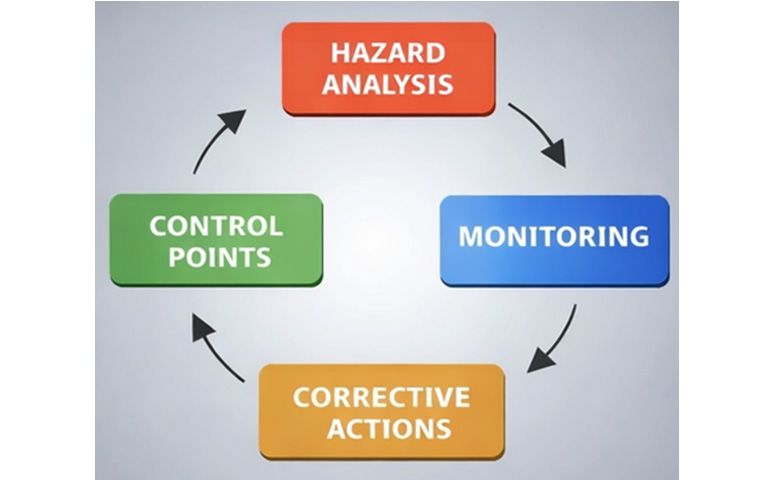
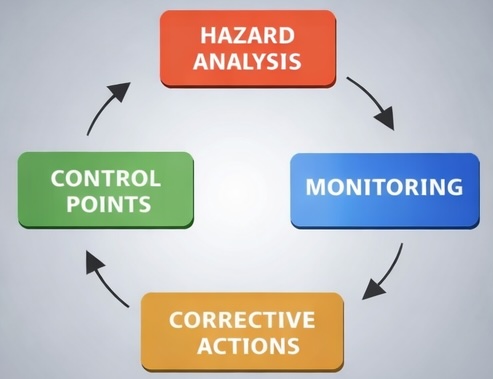
HACCP is a science-based food safety management system that focuses on prevention rather than end-product inspection. In seafood processing, HACCP requires facilities to:
-
Identify potential hazards
-
Determine where those hazards can be controlled
-
Establish measurable limits
-
Monitor and record compliance
-
Take corrective action when deviations occur
Unlike traditional quality checks that rely on visual inspection alone, HACCP addresses risks that may not be visible—such as bacterial growth, chemical contamination, or temperature abuse.
In export seafood operations, HACCP is typically integrated into daily production routines, staff training, equipment maintenance, and documentation systems.
Why HACCP Is Critical for Export-Grade Seafood Quality
Export-grade seafood must travel long distances, pass multiple inspections, and remain safe until it reaches the buyer. HACCP supports this by:
-
Controlling food safety risks at every stage
-
Maintaining consistent product quality across shipments
-
Supporting traceability and accountability
-
Reducing the risk of shipment rejection or recalls
Many importing countries and international buyers expect HACCP-based systems because they provide transparency and predictability. While HACCP alone does not guarantee acceptance into any specific market, it demonstrates that a processor understands and manages food safety risks responsibly.
HACCP Application at Key Seafood Processing Stages
1. Raw Material Receiving
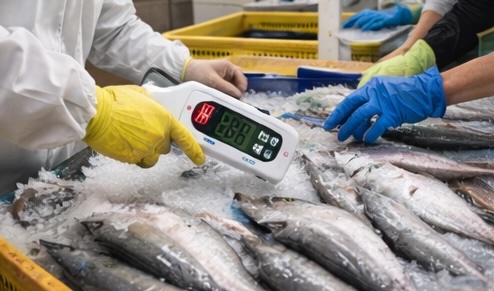
The HACCP process begins before production starts. Raw seafood arriving at a processing facility is evaluated for condition and safety.
Common controls include:
-
Temperature checks upon arrival
-
Visual inspection for freshness and damage
-
Verification of supplier documentation
Receiving is often treated as a critical control point because poor-quality raw material cannot be corrected later through processing.
2. Processing and Handling
During processing—such as cleaning, filleting, or portioning—HACCP focuses on preventing contamination and limiting exposure to unsafe conditions.
Key controls include:
-
Sanitation of equipment and work surfaces
-
Personnel hygiene (protective clothing, handwashing)
-
Controlled processing time at ambient temperatures
Biological hazards such as bacterial growth are closely linked to time and temperature during this stage.

3. Freezing and Temperature Control
Freezing is a critical step for many export seafood products. HACCP plans define precise temperature targets and freezing times to ensure product safety and quality.
Controls commonly include:
-
Rapid freezing to prevent microbial growth
-
Continuous temperature monitoring
-
Equipment calibration and maintenance
Freezing does not eliminate hazards, but it significantly slows biological activity when done correctly.
4. Cold Storage and Inventory Management
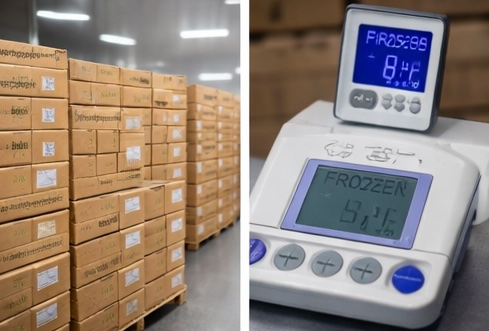
Once frozen, seafood must remain at stable temperatures until shipment. HACCP procedures ensure cold storage rooms are monitored and managed consistently.
Typical practices include:
-
Storage at -18°C or lower
-
Temperature recording logs
-
First-in, first-out (FIFO) inventory rotation
Cold storage failures are among the most common causes of quality degradation in frozen seafood.
5. Shipment Preparation and Dispatch
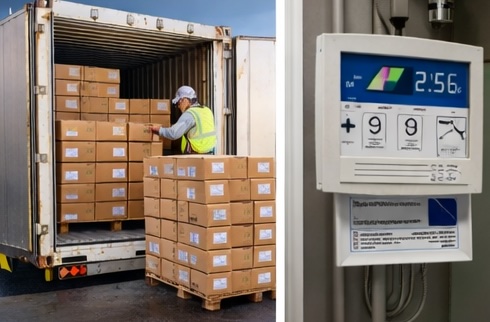
Before export, products are prepared for loading into refrigerated containers. HACCP controls help ensure cold chain continuity beyond the processing facility.
Controls may include:
-
Pre-cooling reefer containers
-
Verifying container temperature settings
-
Sealing and documentation checks
This stage connects processing quality with international logistics.
Preventing Biological, Chemical, and Physical Hazards
A core principle of HACCP is hazard prevention. In seafood processing, hazards are generally grouped into three categories:
Biological Hazards
-
Bacteria such as Salmonella or Listeria
-
Parasites in certain fish species
Controlled through temperature management, sanitation, and time limits.
Chemical Hazards
-
Cleaning chemical residues
-
Fuel or lubricant contamination
Controlled through proper chemical storage, staff training, and equipment maintenance.
Physical Hazards
-
Metal fragments
-
Plastic or packaging debris
Controlled through equipment checks, visual inspections, and metal detection where applicable.
HACCP ensures these hazards are addressed systematically rather than reactively.
Critical Control Points and Monitoring
Critical Control Points (CCPs) are stages where control is essential to prevent or eliminate a hazard. In seafood processing, common CCPs include:
-
Receiving temperature
-
Freezing temperature
-
Cold storage conditions
Each CCP has:
-
A defined critical limit
-
A monitoring method
-
A corrective action plan
For example, if storage temperature exceeds the limit, corrective action may involve product evaluation, segregation, or disposal depending on severity.
Documentation, Traceability, and Internal Audits
HACCP relies heavily on documentation. Records demonstrate that controls are followed consistently and allow traceability if issues arise.
Common records include:
-
Temperature logs
-
Cleaning and sanitation schedules
-
Corrective action reports
-
Supplier and batch identification records
Internal audits help verify that HACCP plans are implemented as designed, not just written on paper. Audits identify gaps, training needs, or procedural weaknesses before they become serious problems.

How HACCP Supports Cold Chain Integrity
Cold chain integrity is essential for frozen seafood exports. HACCP supports cold chain reliability by:
-
Defining temperature limits at every stage
-
Requiring continuous monitoring
-
Creating accountability through records
When combined with proper logistics practices, HACCP helps ensure seafood arrives in the same condition it left the processing facility.
Challenges in HACCP Implementation
Implementing HACCP is not without challenges:
-
Staff training consistency
-
Equipment maintenance costs
-
Documentation workload
-
Adapting procedures to different products
However, these challenges are manageable when HACCP is treated as an operational system rather than a compliance exercise. Facilities that integrate HACCP into daily routines tend to experience fewer quality incidents and stronger buyer confidence.
Why Buyers Expect HACCP-Based Systems
International buyers rely on HACCP because it:
-
Reduces uncertainty
-
Demonstrates process control
-
Supports long-term supply relationships
While HACCP does not replace buyer audits or market-specific regulations, it provides a common language for quality and safety across borders.
Conclusion: HACCP as the Foundation of Export-Grade Seafood Quality
HACCP processing plays a central role in ensuring export-grade seafood quality. By controlling hazards, maintaining cold chain integrity, and supporting traceability, HACCP helps processors deliver consistent, safe products to international markets.
For seafood buyers, understanding how HACCP works provides insight into supplier reliability and risk management. Export-grade quality is not achieved through inspection alone—it is built through disciplined systems, trained personnel, and continuous monitoring across the entire seafood supply chain.